Events.
Panels, workshops, office hours and community gatherings.
Event
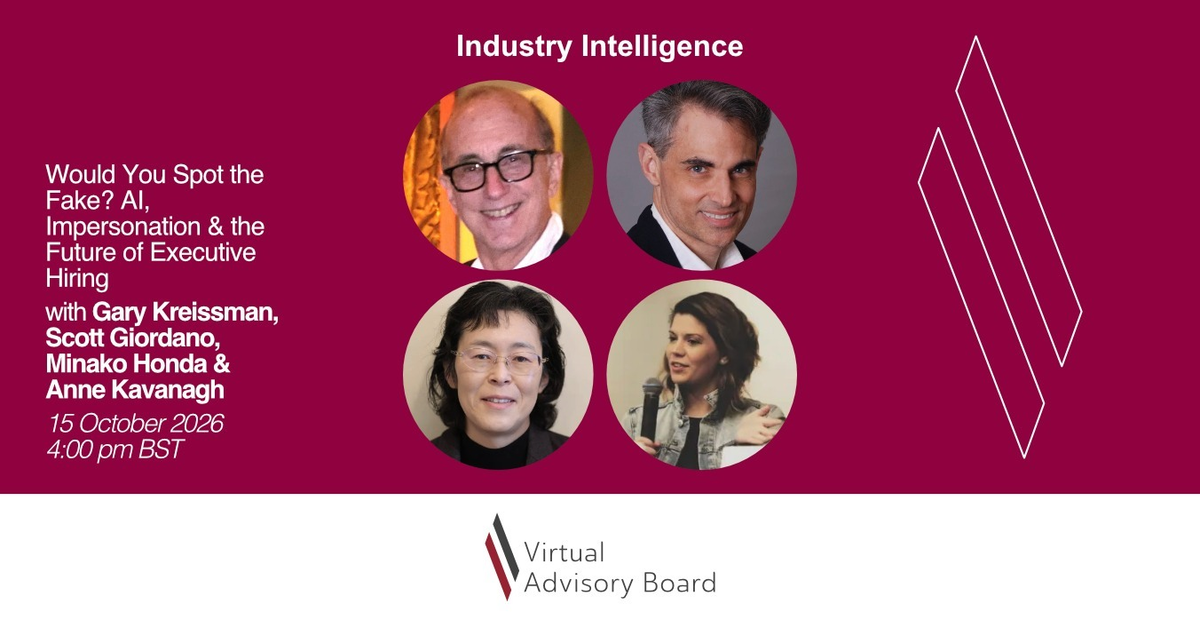
Would You Spot the Fake? AI, Impersonation & the Future of Executive Hiring
Thursday, October 15, 2026 at 3:00 PM EDT
Location to be announced
AI is transforming executive hiring, but it is also transforming what we can trust. A recruiter can be impersonated. A candidate can be AI-generated. A professional profile can be cloned. A voice, image or identity can be reproduced convincingly. And an opportunity that looks credible at first glance may not be what it seems. For executives, boards and organisations, this creates a much bigger challenge than simply learning how to spot a scam: how do we build and verify trust when increasingly sophisticated technology operates on both sides of the hiring process? In this practical 60-minute panel, Gary Kreissman, Board Advisor, Founder and Investor, starts with a real experience: an unsolicited board approach convincing enough for him to engage before discovering that things weren
RSVP
Event
Who Owns Your Voice? AI, Music & the New Rights Stack
Thursday, October 15, 2026 at 5:00 PM EDT
Online
AI is turning an artist's voice into an asset that can exist independently of anything they recorded or wrote. A voice can now be cloned outside of the songs, the masters, and the compositions it was trained on, the exact material that recording and publishing rights were built to protect. Most of the conversation around this has focused on fear, lawsuits, and who's getting sued. This session is about something different: who actually controls a cloned voice today, and who gets paid for it. We'll cover what artists and their teams need to understand before a voice can be licensed, cloned, or used, where existing music rights frameworks do and don't cover a synthetic voice, what real consent looks like in a voice deal, and why artists shouldn't have to find out where they stand after it's already happened. Whether you're an artist, a manager, an attorney, or work at a label, publisher, or rights org, this session will help you understand both the opportunity and the exposure that comes with AI and voice. We'll cover: How a voice clone can exist entirely outside the recordings and compositions it was trained on Where masters, publishing, and PRO royalty structures do and don't cover a synthetic voice What real consent needs to include: scope, duration, compensation, revocation Who currently controls a cloned voice, and who gets paid when it's used Real scenarios: what happens when a voice is cloned or licensed without the artist's knowledge Practical steps artists and their teams can take today 🎤 Moderator & Speakers Dropping soon 👀 💡 Who Should Attend Artists and musicians Artist managers and talent agents Music and entertainment attorneys Label and publishing executives PROs and rights organizations Music tech and AI music platform operators 💬 Why Attend Understand where a voice clone falls outside traditional recording and composition rights Learn what's actually enforceable today versus what's still a legal gray area Get language for what to ask for, or refuse, in an AI voice-licensing deal Understand who currently controls a cloned voice and who gets paid Leave with practical steps to protect and monetize your voice
RSVP
Event
Can You Trust What You See? Journalism, PR & the Fight for Authenticity
Wednesday, October 28, 2026 at 5:00 PM EDT
Online
Quotes can be manufactured. Recordings can be manufactured. Images and entire events can be manufactured. AI has made fabrication cheap and fast, but verification hasn't caught up. A fake quote from an executive, a synthetic recording of a spokesperson, a manufactured image of an event that never happened: any of these can spread widely before anyone has a chance to confirm it isn't real. That puts journalists in the position of verifying what's true faster than ever, and puts PR and communications teams in the position of protecting people and brands from things they never actually said or did. We'll cover how quotes, recordings, images, and events are being manufactured today, what real verification actually looks like versus what most teams currently have in place, where responsibility sits between platforms, media, and the people being represented, and what newsrooms and comms teams can do right now, not eventually. Whether you're a journalist, an editor, a publicist, or run communications for a brand or executive, this session will help you understand how fast the ground is shifting under what counts as verifiable. We'll cover: How quotes, recordings, images, and events are already being fabricated, and how convincing it's gotten The gap between how fast fabricated content spreads and how fast it can actually be verified What meaningful verification looks like for a newsroom versus a communications team Where responsibility sits between platforms, media organizations, and the people or brands being represented Why authenticity now has to be actively established instead of assumed Practical steps newsrooms and comms teams can take today 🎤 Moderator & Speakers Announcing soon 👀 💡 Who Should Attend Journalists and editors PR agencies and publicists Corporate communications teams Media law and defamation attorneys Platform trust and safety professionals Brand and executive communications teams 💬 Why Attend Understand how manufactured content is already circulating in journalism and PR Learn what verification actually looks like today versus what's still a gap Understand where responsibility sits between platforms, media, and comms teams Get practical steps to protect the people and brands you represent Leave with a clearer sense of what authenticity requires going forward
RSVP